
Thriving in the Seminary: How to Balance School and Family

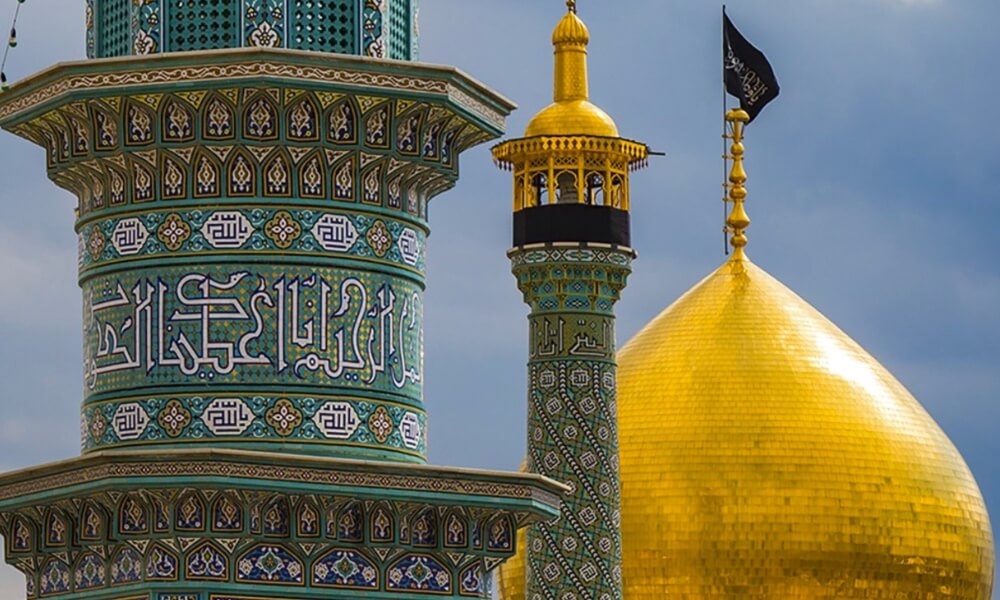
Attending seminary at Qum is more than a school; it’s a spiritual statement. It is a place where intellectual pursuit meets spirituality. It is a place where you can pursue and develop your mind and your heart together. The stakes are higher for those of you who also bring family responsibilities into the mix. You will have much to juggle as you work to responsibly move forward in your study, manage the financial obligations you now are taking on, and fulfil your emotional and spiritual commitments to your family. Commitments to yourself, your studies, and your family can be extremely difficult to balance. That said, if intentional, practical, and spiritual, it is not only possible to survive seminary but to thrive in.
- Remember Your “Why”
Your journey in Qum Seminary begins—and continues—with intention. This intention, and your “why” is more than a motivational tagline; it is a metaphysical foundation. When you’re exhausted from the onslaught of classes, late-night readings, or tensions at home, it is your original calling that will constantly remind you to persist. Why did you come to Qum? Was it to serve the Muslim community, teach, defend the truth, grow in your relationship with Ahlul Bayt (as), or prepare yourself for religious leadership?
Write it down. Literally. Place it visibly—in your study space, your prayer rug, your mirror. Let it remind you that you are not just studying Islam; you are being shaped by Islam. As one Qum student said, “When I remember that I came here to become a servant of truth, even the exhaustion begins to feel sacred.” Importantly, your “why” is not about prestige or proving yourself; it is about fidelity to the Divine call. When the struggle becomes real, come back to that call—it will keep your heart alive in a challenging academic space.
- Master the Art of Scheduling
Life in a seminary has a special pace. Between the hawza courses, Arabic or Farsi studies, spirituality sessions, family responsibilities, and a myriad of other things, your time is a trust (amanah). Don’t try to be busier; rather be more purposeful. Use Google Calendar, a planner, or a whiteboard, to lay out your week. Time-blocking is effective; decide what hours will be assigned to courses, review, family, prayer, and rest. Yes, rest. No, that’s not being lazy. It’s part of your worship. Schedule your Qur’an reading and silences with the same seriosity as a usul al-fiqh class. Let your planner be a reflection of who you are. Review your day, everyday: What went well? What needs more time? What can I let go of?
Planning will not eliminate difficulties, but will stave off unnecessary disorder. In Qum, where days and nights can become remarkably indistinct, discipline can be freedom.
- Communicate
Qum is an incredibly communal environment—but that doesn’t mean everyone else fully understands what you’re going through. Your teachers, your wife, your children, your fellow students—they all need you to communicate honestly and openly with them. If you’re struggling, communicate early with your teachers. Most of them are seasoned scholars that really understand the balance between ilm (knowledge) and life. You don’t want to wait until you are in crisis mode to reach out to them either. Likewise, communicate with your family. Pull them in—not just into your agenda, but into your journey. Share things you’ve learned in class. Have a conversation about lessons you’ve been reflecting on. Invite your spouse and children into your development—not just into your stress.
You are not only a student at home; you are also a partner and a parent. Regular communication builds love and trust and allows one another to avoid resentment. Let your family be your support system instead of your untold burden.
- Protect Your Spiritual Life
It may seem ironic, but many students in Qum admit that sometimes amidst their studies, they feel a sense of alienation from the Divine. The twofold peril lies in simply engaging in religious texts on an intellectual level. Let your personal worship not suffer the collateral damage of academic pursuits. Set clear boundaries between your academic and devotional reading. Read Qur’an and hadith not only to analyze but to reflect. Read the Qur’an or hadith to reflect. Let your salat be undertaken without a series of ideas imploding in the center of your mind. Develop a stable practice of dhikr or du’a. Even several minutes of deeper remembrance of the Divine can re-center your existential whole. If you have the means, try to find a spiritual teacher, and don’t allow your success in academics come at the risk of spiritual erosion. Knowledge without taqwa can be dangerous. Let your studies propel you towards the Divine instead of away from Him.
- Set Boundaries, Not Just Goals
There is never an end to the amount of classes and dars in Qum. However, attempting to undertake everything will leave you spiritually, mentally, and emotionally exhausted in no time at all. The ambition to gain knowledge and journey towards Allah(swt) must coincide with setting boundaries. Begin with understanding your non-negotiables—whether it be reserving one evening for family, spending time during fajr with your reflections, or having a no-phone rule during Qur’an recitation. These boundaries may seem minimal, but they instill an order of health and holiness in your day. The distractions of technology pose one of the greatest threats to your attention and peace. Establish some defined tech-free hours. Delete all apps in which you are most likely wasting your time. Avoid scrolling on your phone in your bedroom or place of prayer. Remember that your attention is a trust! Another area to help define your boundaries is by saying no, even to potentially beneficial opportunities. You will not be able to attend every class or finish every book. The boundaries you create in your daily life, and boundaries for time spent in all activities, are not selfish, but responsible. Boundaries protect your amanah.
- Ask for Help — It’s Sacred
It’s not a weakness to ask for help, rather it’s a sign of humility and wisdom. If you need help with your studies, parenting, budgeting, or understanding cultural dynamics remember, the seminary community is filled with people who care. Don’t hesitate to ask for help academically from more advanced students, spiritually from scholars and mentors, emotionally from peers, friends, or counselors, and practically from your family. Let others help you when you can.
Yet the most important and fundamental help you can ever seek comes from Allah (swt) Himself. Before the schedules, the support systems, and strategies, is the power of du’a. Ask Allah (swt) for help every day, every moment. This is not just in a formal dua, rather every momement in the quiet of your heart, whisper your needs to Allah(swt) with the absolute trust that He hears, He understands, and He cares.
وَقَالَ رَبُّكُمُ ادْعُونِي أَسْتَجِبْ لَكُمْ
“And your Lord says, ‘Call upon Me; I will respond to you.’” (Qur’an 40:60)
The du’a of a fatigued, sincere seeker is never lost. Allah(swt) does not reject an outstretched hand that is pleading in need, especially when the outstretched hand is striving towards Him(swt). He sees the secret tears, the confusion over difficult academic texts, the fatigue of straining to hold your family and your studies together.
وَإِذَا سَأَلَكَ عِبَادِي عَنِّي فَإِنِّي قَرِيبٌ ۖ أُجِيبُ دَعْوَةَ الدَّاعِ إِذَا دَعَانِ ۖ فَلْيَسْتَجِيبُوا لِي وَلْيُؤْمِنُوا بِي لَعَلَّهُمْ يَرْشُدُونَ
And when My servants ask you concerning Me—indeed I am near. I respond to the invocation of the supplicant when he calls upon Me. So let them respond to Me and believe in Me that they may be rightly guided. (Qur’an 2:186)
A single heart-felt du’a can simply be remarkable in opening infinite doors of understanding, strengthening your home, easing your path, or simply providing you with the patience to endure. Let du’a become your first response, not your last option. It is only when we regularly and humbly put our trust in Allah(swt) that He starts to create real success in studies, family, and life.
وَمَن يَتَوَكَّلْ عَلَى اللَّهِ فَهُوَ حَسْبُهُ
And whoever relies upon Allah—then He is sufficient for him(Qur’an 65:3)
- Let Gratitude Be Your Guide
وَإِذْ تَأَذَّنَ رَبُّكُمْ لَئِن شَكَرْتُمْ لَأَزِيدَنَّكُمْ وَلَئِن كَفَرْتُمْ إِنَّ عَذَابِي لَشَدِيدٌ
And [remember] when your Lord proclaimed: If you are grateful, I will surely increase you [in favor]; but if you deny, indeed, My punishment is severe(Qur’an 14:7)
In an environment like Qum, which is saturated with scholarship and the pulse of spiritual life in every form, it is easy to feel the full weight of responsibility and intensity that studying imposes. One of the best habits you can form is to cultivate an attitude of gratitude. Let gratitude lead you—not only as a virtue of servitude, but as a practice each day to adjust your heart’s gaze. Be thankful for your studies in one of the most revered places in the world, for being able to walk paths walked by scholars and saints; and for exposing yourself to divine knowledge that others will only dream of having access to. And, even if you find yourself studying through fatigue, frustration, or homesickness, choose to recognize the grace in your experience: the teacher that kindly explained a difficult point to you, the friend who offered you a warm meal, or even the moment of clarity after wrestling with confusion for a long time. Gratitude doesn’t dismiss struggle, it reorients it. It reminds us that every struggle is a gift, every achievement has been entrusted to us, and every moment in Qum is another story we are adding to our ongoing saga of servitude to Allah(swt). With gratitude as your lens, seminary is not just bearable, it is beautiful.
- Hadhrat Masuma(sa) illuminating the Path
To thrive in seminary in Qum is to walk in the spiritual shadow of Hadhrat Fatima Masuma (sa), whose presence sanctifies the city and whose time immemorial legacy inspires seekers of knowledge from around the world. Her shrine is not only a place of pilgrimage—it is a sanctuary of strength, a reminder that piety, knowledge, and resilience are not separate but one path towards Allah(swt). For seminarians in Qum, she stands as a beacon of what it means to balance intellectual rigor with deep spirituality. Attending her shrine to petition her support is more than consolation; it rallies support and direction. When you feel tired or consumption by doubt slowly settles, remember that you are studying in her city. Let her noble life remind you that thriving as a seminary student is not about only passing the learning assessments but engaging your soul and body in Truth. Serving Truth is anything but an easy task and we read in our key text you cannot serve Truth by maintaing arrogance or pride.
Conclusion
Seminary life in Qum is not a season. It is a test from God and a gift from God. It is where hearts are honed, thoughts sharpened, and lives prepared for action. It is also difficult. However, difficult is not synonymous with wrong. Remember your purpose. Plan with purpose. Communicate with love. Protect your worship. Set boundaries. Seek help. And practice gratitude.
You are not simply enduring seminary life. You are being shaped by it.