
Avoiding Qum Seminary Burnout: 5 Inner Disciplines for Sustained Spiritual Resilience

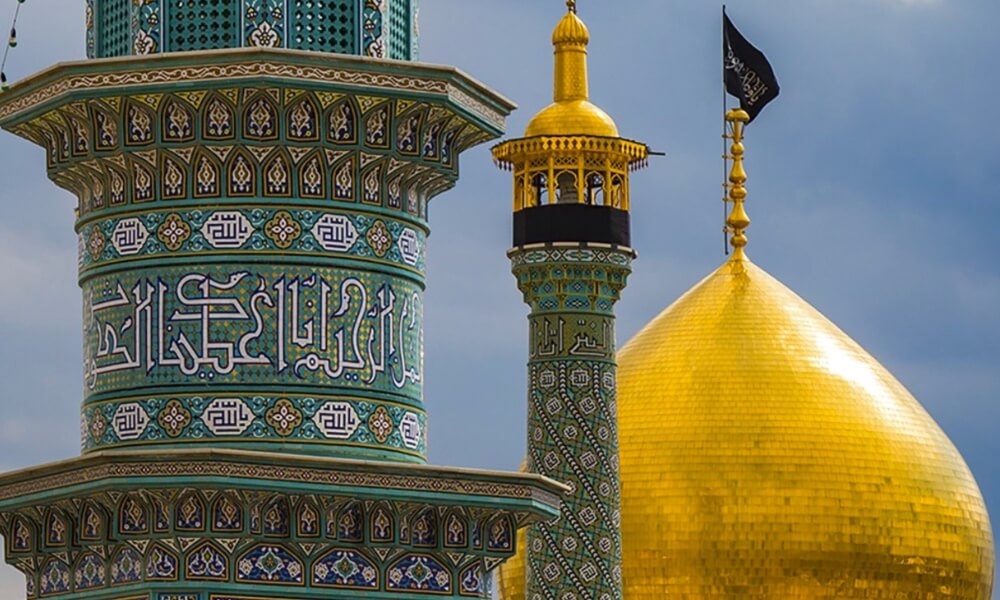
Qum signifies something different than “just a city” – a haven of sacred knowledge, a conjuncture of hearts that are determined to draw closer to God, a garden of both the intellect and spirit. Like every sacred endeavor, the pursuit of ‘ilm can leave us drained, exhausted, and sometimes—the spirit can be overwhelmed. Often students find themselves reciting but with dry tongues, parsing text with tired eyes, and wandering holy sanctuaries feeling spiritually parched.
Burnout is a real phenomenon, even at a place of barakah.
Survival rather transformation requires skills beyond time management and caffeine. It requires implementing spiritual practices that maintain the inviolable innermost self. Here are five spiritual practices for safeguarding your soul in the middle of student life in Qum:
- Tazkiyat al-Nafs: Purification of the soul
As you pursue your studies in the high-paced academic and spiritual environment of Qum, you’ll not only find the danger of academic fatigue or intellectual burnout, but also spiritual stagnation. Tazkiyat al-nafs (purification of the soul) is not just a specialty of the mystic; it is an essential prerequisite for anyone studying sacred knowledge. One often succumbs to burnout when their heart is disordered with pride in knowledge, envy directed towards their peers, or the desire for recognition as follows:
- A lack of constant purification allows us to overthink and corrupt even noble aspirations when the ego makes its way in.
- Tazkiyah is every day. It begs you to recognize and confront the diseases of the heart on a daily basis; arrogance, self-righteousness, and complacency with the spiritual path are just a few things to contend with.
- Tazkiyah is not just the act of avoiding sin and disobedience. It is returning the heart to a state of pure sincerity (ikhlāṣ) and longing for Allāh.
- Purification takes place through sincere tawbah and between prayer, dhikr, fasting, and silence, the heart softened as the intention behind the journey becomes realigned.
- Knowledge is light when the soul is clean, instead of being a burden. And in that light, the student flourishes – not only academically, but devotionally as an `ābid of Allāh.
The benchmark of success is not how many books you have read but it is premised on the purification of the self. Allah(swt) states in the Holy Quran:
قَدْ أَفْلَحَ مَن زَكَّاهَا
“He has certainly succeeded who purifies it.” (Qur’an 91:9)
- Muhāsabah and Murāqabah (Self-Accounting and Spiritual Vigilance)
The first safeguard against burnout in seminary life is less external and much more internal. Muhāsabah (self-accounting) and murāqabah (spiritual vigilance) are twin disciplines that keep the soul pointed toward Allah in light of life’s persistent pressures. Before we make duʿāʾ or even practice gratitude, we must be present. Murāqabah is being in a permanent condition of awareness that Allah is witness to you and is directing your every instant of life. This awareness is not rooted in fear, but in a loving consciousness.
وَهُوَ مَعَكُمْ أَيْنَ مَا كُنتُمْ
“And He is with you wherever you are.” (Surah al-Ḥadīd, 57:4)
In a fast-paced environment like Qum, it is easy to fall into a state of ghaflah (heedlessness)—mechanically engaging with academic tasks while the heart is disengaged. Murāqabah, on the other hand, shifts this narrative entirely. It can turn even the simplest actions—taking notes, walking to class, folding laundry—into spiritual actions, by realizing that you are always in the presence of the Divine. Muhāsabah would then allow you to pause, reflect, and rectify your intention, on a daily basis. By doing so, these practices can assist you in ensuring sincerity, safeguarding the soul from a state of spiritual fatigue, and reframing your studies as acts of service to Allah not performance to self and others. Without engagement in these practices, knowledge can burn like a fire without the light of nearness to Allah.
- Immersing in the Qur’anic: Recitation as Revival, Not Requirement
Engaging with the Qur’an as a scholarly pursuit is one thing, but truly allowing the book’s divine words to permeate and renew the heart is something else altogether. In Qum Seminary where recitation, memorization and tafsīr studies are extremely rigorous and academic in nature, it is very easy to study and learn about the Qur’an without allowing it to enter your heart. To overcome this—not just retain or remember—establish a ḥizb for yourself that is not for exams or assignments, but rather for spiritual intimacy and proximity to the Divine. Allow the Qur’an’s rhythm, flow, and stillness to remake your heart. Remember, this is not a mental excercise—this is presence.
Allah says in the Qur’an:
ٱلَّذِينَ ءَامَنُوا۟ وَتَطْمَئِنُّ قُلُوبُهُم بِذِكْرِ ٱللَّهِ ۗ أَلَا بِذِكْرِ ٱللَّهِ تَطْمَئِنُّ ٱلْقُلُوبُ
“Those who believe and whose hearts find rest in the remembrance of Allah—indeed, in the remembrance of Allah do hearts find tranquility.” (Qur’an 13:28)
Let the Qur’an soften that which has been crystaliozed, wakeup that which has been in slumber, and sweeten again that which has been dulled by over-examination. Qur’an is the greatest alchemical formula that can hermitically transform you and make you divine.
- Keeping the Company of the Spiritually Upright
Often, the spiritual quality of those who you associate with is the most overlooked and decisive element in your ability to thrive—not just academically, but spiritually in the seminary. In Qum, the seminary is not just a place for learning; it is an ecosystem of souls in formation. Every interaction, every shared challenge, every late-night study session has the potential to either elevate your heart closer to Allah or gradually desensitize your heart to Allah’s weighty responsibility. Your peers are never neutral. They are either propelling you forward along a spiritual path, or locking you in place. Hence, even one person with sincere taqwā can serve as a catalyst for change; their company becomes a spiritual filter through which you view your own actions more clearly. Their existence becomes a reflection of your intentions, they remind you of your purpose, and they help you identify when your heart becomes distracted.
The Qur’an advises us:
وَاصْبِرْ نَفْسَكَ مَعَ ٱلَّذِينَ يَدْعُونَ رَبَّهُم بِٱلْغَدَوَةِ وَٱلْعَشِىِّ يُرِيدُونَ وَجْهَهُ
“And keep yourself patient with those who call upon their Lord morning and evening, seeking His Face.”(Qur’an 18:28)
Living life intentionally is not a suggestion – it is a way to save your soul. When your heart is exhausted or covered over, you will require the support of others to help remind you of what you once envisioned. In this sense, a friend or a teacher who is aligned spiritually is not just an element of your support network – they are part of your salvation rather, your transformation. Their being strengthens you and their steadfastness makes you acutely aware of the constant space between your efforts and theirs. Their companionship allows you to lift you above your desires and beyond any personal ambitions where anything besides God is your intention.
- Anchoring the Soul through Living Duʿāʾ
Real duʿāʾ is not an appendage, merely tagged on when you are in dire distress, it is the very movement of your spirit that is aware of its utter dependence on Allah in every breath it takes. You as a seeker navigating the waters of seminary of Qum’s sacred knowledge and the stressors that come with it, in your duʿāʾ must come to a place where it leaves its ritualistic vehicle and becomes a living active rhythm of being in your soul. You should not just perform it for an exam or a test of will, rather make it one continuous existence that comes upon you perpetually, from moment to moment.
Allah(swt) says:
وَقَالَ رَبُّكُمُ ادْعُونِي أَسْتَجِبْ لَكُم
“And your Lord says, ‘Call upon Me; I will respond to you.’”
(Surah Ghāfir, 40:60)
This verse is not only a promise—it is an open invitation to organize your inner world around Divine nearness. Allow your heart to become fluent in duʿāʾ like the tongue becomes fluent in language. Share with Him your doubts, your small wins, and even your mental fatigue as acts of tawakkul—putting full reliance on Him not as your Plan B, but at the very center of your action.
Conclusion
Fatigue is not a sign of weakness; it is an invitation to deeper alignment. These five spiritual practices are not peripheral to your studies; they are integral. Without them, knowledge may become flat. With them, every moment in Qum becomes a sacred stitch within the tapestry of your journey towards Allah. So when your books become heavy, your language becomes dense, your hours become long—come back. Comeback to your self-purification. Comeback to your Muhāsabah and Murāqabah. Come back to the Qur’an. Comeback to the company of the spiritual souls. Come back to your duʿāʾ. And in that coming back, you will find the secret for your transformation.