
What is the Hawza? Demystifying Traditional Islamic Seminary Education

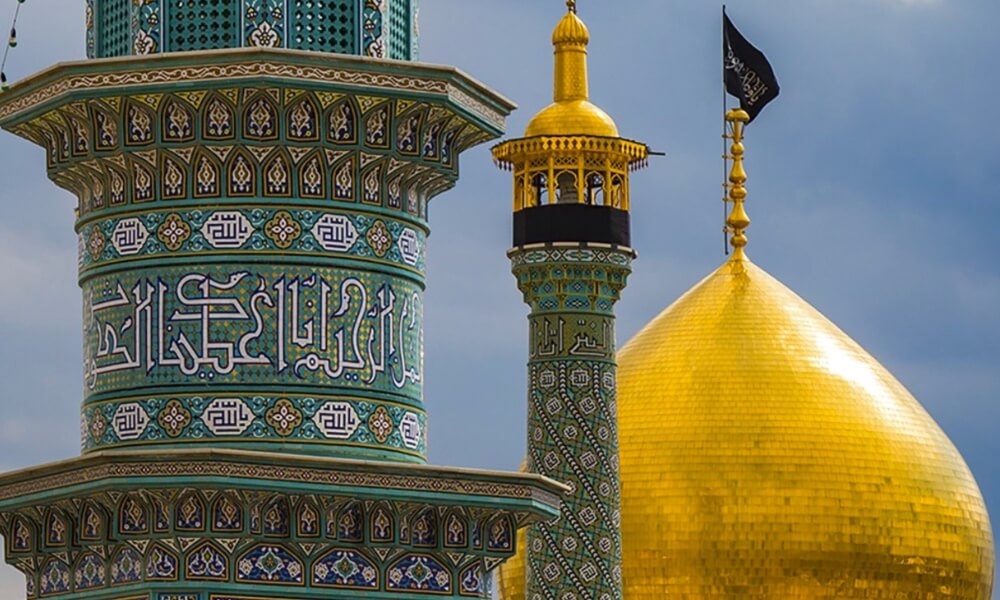
For many, the word “Hawza” brings to mind long-robed scholars, classical Arabic texts, and the ancient seminaries of Qum and Najaf. But what exactly is the Hawza? How does it differ from a university? What attracts thousands of students from across the globe to this classical system of Islamic education? This blog will try to unpack these inquiries.
The Meaning of “Hawza”
The word hawza comes from an Arabic root meaning “to encircle” or “to gather,”. The space created is both physical and metaphysical where teachers and students congregate in pursuit of knowing the Divine. Historically and metahistorically following the prophetic tradition established in the city of Medina and carried forth through by the Imams of the Ahl al-Bayt (ʿa).The Hawza thus is a living continuation of a prophetic legacy.
The technical term ḥawza ʿilmiyyah refers to the traditional seminary system in Shiʿi Islam where knowledge is not merely a mental excercise but an experience. In contrast to modern academic institutions that often emphasize technical proficiency and formal qualifications, the Hawza is a holistic ethos of learning and spiritual refinement – the idea of education and edification. The distinction of the Hawza is derived not only from the learning and curricula rather the methodology and disposition. The ustādh–murīd (teacher–disciple) relationship is vital in any Hawza to ensure that knowledge is transcribed with sincerity (ikhlāṣ), adab (etiquette) and that it is learnt in a state of taqwā (God-conscious). The murīd of the Hawza is responsible for purifying his intention, developing his character and learning in a context of service to the ḥaqq (truth). The Hawza is not simply a form of education but a way of life and to enter is to commit to a path, which involves adopting an attitude of humility and accountability for the knowledge gained and struggle (mujāhada) for the sake of gaining sacred knowledge and nearness to Allah (swt).
A Timeless Pedagogy
Unlike today’s universities that emphasize strict departmental boundaries with explicit credit hours and rigid semesters, the ḥawza ʿilmiyyah operates within a more fluid, organic, and personal method of education. The Hawza has its roots not just in Islamic knowledge but the entire intellectual tradition spanning more than 1,000 years. As a formal and religious organization of learning, the ḥawza supports the idea that educational stages—such as one working towards Ahadith—values going deep rather than wide, character education rather than credentialism, and a teacher–student relationship as a covenant of trust rather than a commercial transaction.
The learning experience of the Hawza has a teacher-centered approach, though this is not to be confused with traditional models of lecturing. Rather, it has a teacher-centered approach defined by three interdependent levels of educational delivery: talqīn (direct oral transmission and instruction), mubāḥatha (scholarly peer-to-peer dialogue and debate), and mutālaʿa (independent reading and preparation). In the Hawza, students are expected to learn to receive knowledge, to question it, to analyze it, and to internalize it until it informs one’s worldview and actions.
The curriculum is a purposely and carefully scaffolded arrangement that begins with foundational preliminaries:
- Arabic Grammar and Logic (Ṣarf, Naḥw, Manṭiq): The student will learn grammar and logic to meaningfully engage with classical texts with competence.
- Islamic Jurisprudence and Legal Theory (Fiqh and Uṣūl al-Fiqh): The student will learn to reason legally, explain how rulings were derived and articulate the methodology of ijtihād.
- Theology (ʿAqāʾid and Kalam): The student will explore the core beliefs, divine attributes, and rational proofs for their beliefs.
- Qur’anic Exegesis (Tafsīr) and Hadith Sciences: The student will learn to interpret scripture and judge the reliability, and meaning of prophetic traditions.
- Philosophy (Falsafa) and Mysticism (ʿIrfān): One studies metaphysics, ethics, cosmology and the journey of the soul.
What makes Hawza study distinct is not just the content, but the texts and processes used. Classic texts such as al-Lumʿa al-Dimashqiyya in jurisprudence, a-l-Kifāyah in legal theory, and Sharḥ al-Manẓūmah in logic and philosophy, are studied closely, sometimes literally line-by-line. There is nothing passive in this reading; these texts are scrutinized, reflected on, and mulled over with intellectual rigor and spiritual intention.
This approach to study fosters intellectual autonomy and spiritual discipline, producing students cultivated not only with technical and intellectual competence, but also with the character and direction of a moral and spiritual guest. Thus, Hawza is not a degree machine, but a factory of values and character, where knowledge generates action, and learning becomes worship.
The Role of the Teacher and the Method of Transmission
The teacher (ustādh) occupies the central position within the ḥawza system, but this role is deeper than that of a teacher in the conventional sense. The traditional seminary model portrays the teacher not as simply a purveyor of information but an incarnate of the knowledge, adab (ethics), and spiritual states which the student hopes to attain. The relationship between teacher and student (ustādh-murīd), is one of nostalgia, being mentored, and taking on shared spiritual responsibility.
Lessons – often called dars – typically occur in smaller, intimate environments, such as the corner of a mosque, a small classroom, or sometimes even at the home of a scholar. These smaller pedagogical styles create an interactive mode of learning based upon the classical relentlessness of Socratic questioning, clarifications, and dialogue. In these situations, students are not only passive respondents; they are participants in the sharing of meaning, including to push against assumptions, cross-reference foundational texts, and delve deeper into form through critical inquiry. As students continue their studies, they typically begin to attend baḥth al-khārij, the most advanced level of seminary education. The teacher no longer engages a textbook but instead lays out, levels out, and reconstructs legal and theological arguments in a particular subject area, while guiding students through the very complex chains of reasoning. This is meant to facilitate ijtihād, or the capacity to develop Islamic rulings and principles on one’s own, through appropriate language and methodology, and an established basis for producing judgements.
In this model, knowledge is not separate from character. The teacher demonstrates humility in uncertainty, discipline in scholarship, and patience in the face of disagreement. Students acquire not just the intellectual tools at play but the values and etiquette of a standing scholar – valuable traits for one to develop as they become ʿālim—sometimes arguably more than just knowledge. In this way, a teacher can deeply affect their student for a lifetime – affecting not just their mind, but in the process shaping their very soul.
Not Just Academic: A Spiritual Training Ground
What really sets the ḥawza apart from academic schools today is the deep combination of both the spiritual and the intellectual. Studying, or seeking knowledge in Qum (or any traditional seminary environment) is not just about collecting information or getting degrees. Instead, it is about transformation. All of the ḥawza disciplines—from fiqh to kalām, Qurʼanic exegesis to philosophy—are regarded as a way to come to know Allah (swt). This means that students are taught to have a heart-oriented stance in relation to knowledge. The ethics of scholarship—ikhlāṣ, tawāḍuʿ, taqwā and khidmah—are seen as necessary preconditions for knowledge and understanding. Without these, even the most rigorous study can simply turn to empty intellectualism.
This is why many great scholars such as Imam Khomeini(ra) and Allāmah Ṭabāṭabāʾī(ra) repeatedly warned that without tazkiyat al-nafs (purification of the soul) knowledge might act as a veil, not a light, a barrier to not just to the student but to divine proximity. A soul that has not been purified of arrogance, insincerity, and attachment to the dunya cannot see knowledge without distorting it, and as a consequence if it is possessed by pride, partisanship and even misguidance.
The Modern Appeal of a Classical System
In the current context that is increasingly characterized by secularism, hyper-specialization, and prodigious information; the ḥawza offers a radically alternative conception of learning, growing, and serving. The ḥawza is not a conveyor belt to a diploma and it is not an assembly line for careers. It is a place of depth, a spiritual haven, a location where the soul of learning is remembered and the heart is educated with, not against, the mind.
Modern education systems value speed and quantity instead of depth and quality, form instead of spirit, and metrics instead of wisdom. Students experience pressure to “keep up,” to produce, and to brand themselves—very often at the expense of reflection and root. Compared to modern education systems, the ḥawza provides the potential of time to slow down, to think carefully, and to dwell in the eternal. The ḥawza also teaches students that knowledge is not a commodity but rather a trust (amānah) and being a student of knowledge requires not just intellect but reverence, patience, and moral character.
The ḥawza is more than just an institution—it is a journey, a crafting, and a vocation. It shapes those who are ready to carry the burden of sacred knowledge and to live lives committed to ḥaqq (truth), ʿadl (justice), and taqwā (God-consciousness). In the din of our age, the ḥawza is a voice of stillness—not just calling for answers, but for awakening.
Who Should Consider the Hawza?
If you are looking for something more than an academic experience—if you want not just to study the Qur’an but to actually be shaped by it, if you wish to live in a state of presence with Allah and truly serve your community from a place of authenticity and vision—then the ḥawza is probably your calling. Hawza education is not an undertaking for the faint of heart. It is intended for people who are prepared to live a life of disciplined self-reflection, spiritual refinement, and moral responsibility. It is for those who understand that true knowledge is not merely understood or mastered, but is instead lived. True knowledge transforms the knower into a source of divine mercy, justice and wisdom. The ḥawza teaches you, not just knowledge, but a way of seeing reality as it stands in relationship to tawḥīd, developing the intellect, yes, but also the heart, soul, character, and purpose.If you feel a subtle nudge towards a life of greater meaning, service, and sacred connection, it may be more than mere curiosity, it may be divine invitation.
Closing Thoughts
The Ḥawza is more than an academic structure—it is a divine amānah, a spiritual refuge, and a bastion of the Muhammadan reality. It is the living extension of the school of the Prophet (ṣ), the Ahl al-Bayt (ʿa), and the righteous who have derived from the fountain of divine knowledge and illuminated the world in darkness and oppression. Throughout history, Islam’s enemies have attempted to extinguish this divine light—but by the grace of Allah, it endured—not as a system or institution that has power, but rather, as resilience, humility, and brilliance.
It is not a space for those who desire worldly glory or empty degrees. The Ḥawza is only for people whose hearts burn with feverish desire for their Beloved; it is for those whose souls tremble under the burden of responsibility for conveying divine truths to a world inundated with ignorance and ego. In the Ḥawza, knowledge is not a product; it is an amānah, it is a trust, of which the amīr (the one offering it) will first carry the responsibility of purifying the soul before carrying the word. And in Qum—by the blessed shadow of Ḥaḍrat Maʿṣūmah (ʿa), who brings serenity to the hearts of seekers with her light—the call to serve ḥaqq resounds on. In the midst of the global arrogance and spiritual disorientation of our time, perhaps this is where the awakening must begin. The Ḥawza is calling is not only calling students—it is calling soldiers of God.